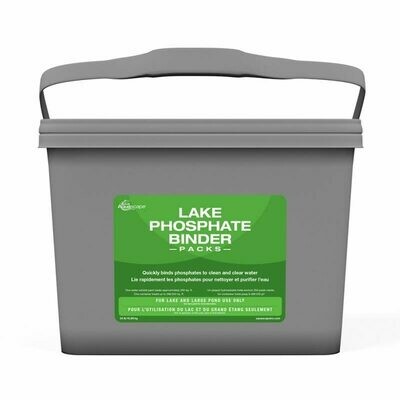
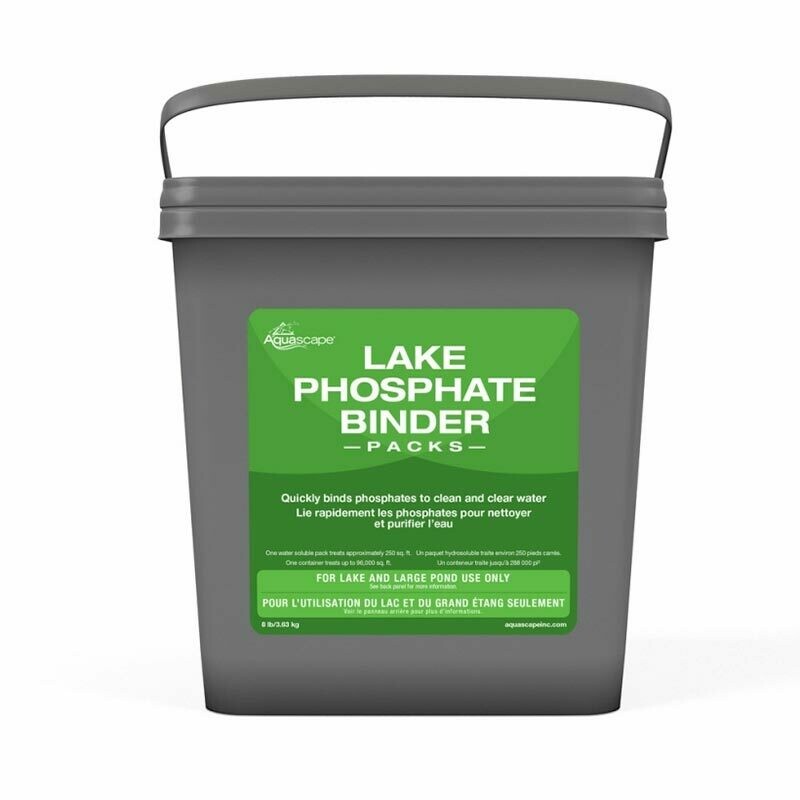
Lake Phosphate Binder Pond Clarifier - 384 Packs (8 lb) Pail - by Aquascape
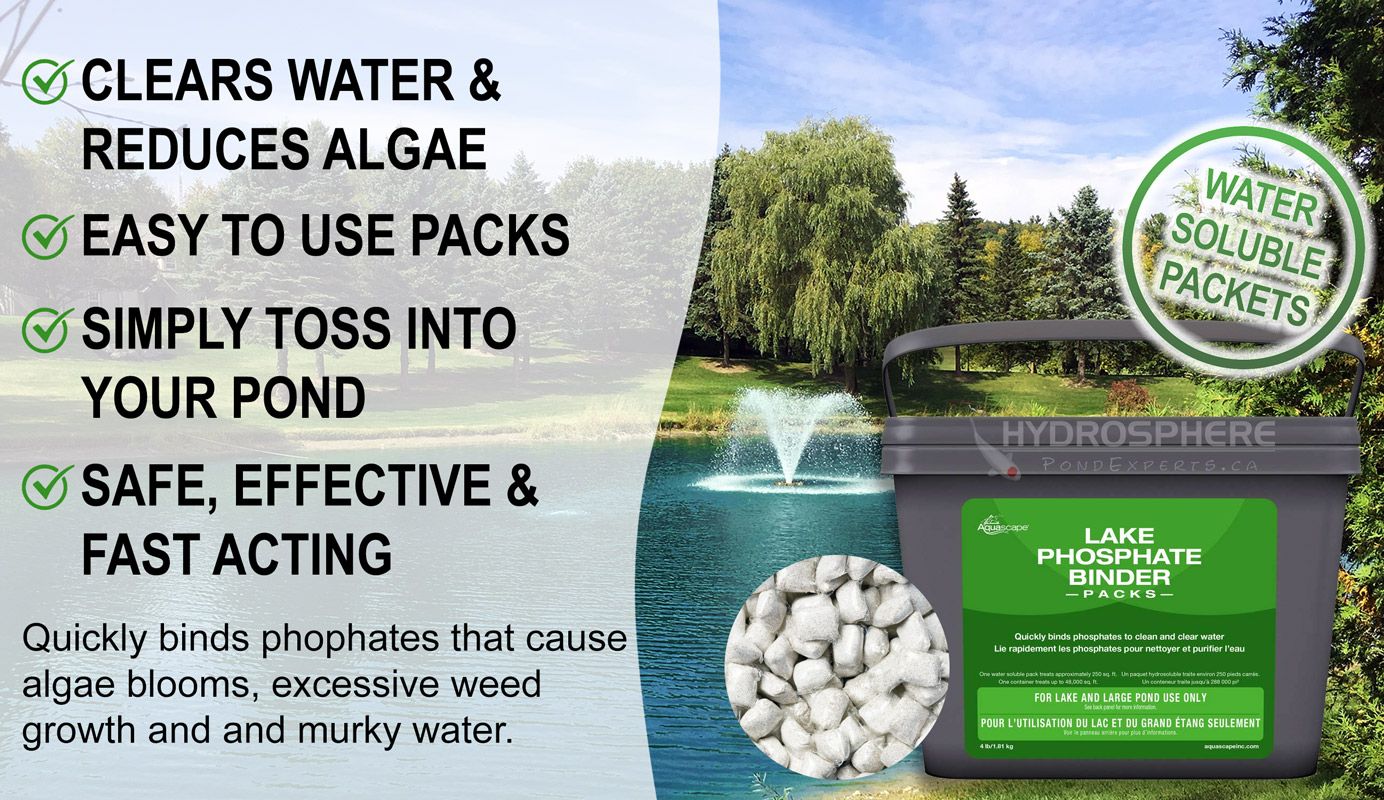
Clears Water & Reduces Algae in a 1/2 acre pond for up to 4 months.
Aquascape® Lake Phosphate Binder Packs quickly bind large amounts of phosphate which otherwise cause issues with water quality and clarity in lakes and large ponds. This specially-formulated treatment will effectively reduce maintenance and bind phosphate (specifically orthophosphate which is the form that is used by plants and algae). Simply toss the easy-to-use water-soluble packs directly into the water. The packs will dose the water column evenly and make it easy to treat hard to reach areas. Safe for fish, plants, and animals when used as directed.
Why Should I Remove Phosphate?
Phosphate is one of the main nutrients that plants and algae consume as food. If you look at a container of fertilizer, you will see a group of 3 numbers listed on the label such as 20-20-20, or 30-10-10. These numbers represent the ratio of the 3 main ingredients: Nitrogen, Phosphorous and Potassium. Phosphorous is the second number in the group. While it is natural to have low levels of phosphorous / phosphate in ponds, excessive phosphate acts like a fertilizer that promotes excessive weed growth, cloudy water and algae blooms in large ponds and lakes. Algae blooms not only make your pond unsightly, they can also lead to poor water quality and low oxygen levels. Phosphates can come from various sources such as runoff, fertilizers, fish or wildlife waste and organic matter such as leaves twigs and branches from trees.
Check out our Lowering Phosphate in Large Ponds page for more information.
Effective Against:
Lake Phosphate Binder Features:
Directions For Use:
Fish, Plant & Wildlife Friendly
When used in accordance with label directions Lake Phosphate Binder Packs are completely safe for your fish, plants, pets and pond wildlife.
Dosage Table:
| Lake Phosphate Binder Packs Dosage Rates | |
|---|---|
| Pond Size (In Surface Acres) |
Phosphate Binder Packs (Once per Month) |
| Up to 1/4 | 44 Packs |
| Up to 1/2 | 88 Packs |
| Up to 3/4 | 132 Packs |
| Up to 1 | 176 Packs |