
Water temperature is important in all aspects of pond keeping, especially as it relates to feeding your koi or goldfish. Therefore, it is not only important to feed a quality koi food, it is also important to feed the proper amount and type of food depending on the water temperature. A fish’s metabolism is directly related to water temperature. The warmer the water – the more the more active fish become and vice versa. Once the water becomes cools enough, the fish will stop eating all together and basically hibernate for the winter.
After a long winter, koi owners are often eager to feed their fish as soon as possible, but always wait until the water has warmed up to at least 48°F / 9°C. It is also a good idea to start the pump and filtration system before you begin feeding to allow for proper breakdown of fish waste. Once again, begin feeding a cold water fish food sparingly and monitor the water temperature and the forecast. As water temperature rises, and their metabolism increases, feed the fish more food per feeding and eventually increase the number of feedings to 2 times per day as they become more active. Always feed your fish only what they will consume in 3-5 minutes. If their is food left after 5 minutes, remove the food and cut back the amount for the next feeding. Some people like to feed their koi wedges of orange in the spring to give them a treat and also a vitamin C boost!
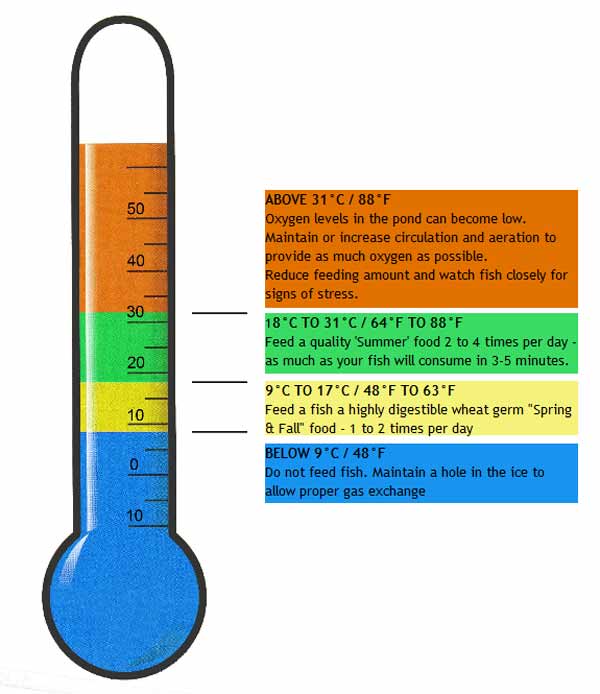
Once the water temperature is over 64°F / 18° C, it is a good idea to switch over to a good summer food because they typically have higher protein levels for increased growth and more colour enhancers for vibrant colours. Summer is the time of year when fish do most of their growing. If you want to maximize the growth of your fish, you can feed them up to 4 times per day, provided you have an adequate filtration system that can effectively cope with the waste from heavy feeding. We carry several excellent summer fish foods with quality ingredients such as Microbe-Lift / Legacy, Hikari, Aquascape and more.
Each fall, as your pond water temperature decreases, your fishes’ metabolism slows down, they become less active and their need for food decreases. Most koi owners observe a gradual but noticeable change in their fishes’ behaviour when the water temperature cools. Generally below 65°F, fish gradually start swimming more slowly and become a bit less interested in food. It is important to check your pond water temperature because as a fish’s metabolism slows down, they aren’t able to effectively digest the rich proteins found in most summer koi foods. Although fish will eat summer food in cold water, they aren’t able to digest it properly and can’t build up energy reserves properly for the winter when they don’t eat. Plus, if you feed a summer food in cold water, much more waste is produced by the fish which can have a negative impact on water quality.
When the water temperature falls to 64°F / 18°C begin feeding a quality Spring and Fall / Cold Water Food such as Microbe-Lift / Legacy, Hikari, Aquascape or PondMax. A proper cold water food will have wheat germ listed as the first ingredient. Koi and goldfish can digest wheat germ very easily, especially in cold water, which means they get more nutritional value from foods with wheat germ as the main ingredient. We recommend gradually transitioning koi onto the cold water food by mixing it with their summer food and then gradually increase the amount. As the temperature falls, gradually cut back the amount you feed your fish as well as the number of times per day you feed them. At around 64°F / 18°C feed your koi no more than 2 times per day and as the temperature falls even more, cut back to once per day. Once the temperature remains below 48°F / 9°C you should stop feeding altogether. Although fish may still eat food below this temperature, it can often do more harm than good as the bacteria in their digestive system stops functioning.
We often get asked by new pond owners what to feed their fish during the winter. They are often surprised to find out the answer is nothing. Feeding koi or goldfish during the winter when the water is too cold will do more harm than good. If you have taken care of your fish all spring and summer, and fed them a healthy diet, they will be able to easily survive the winter without eating.