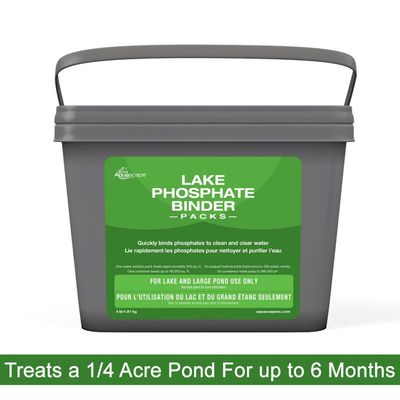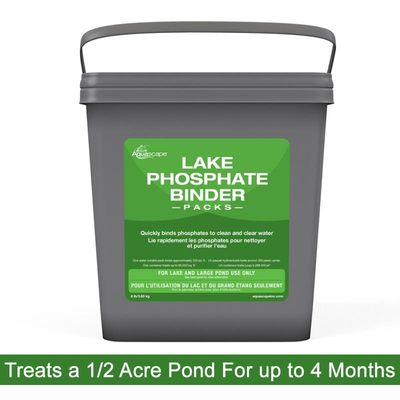
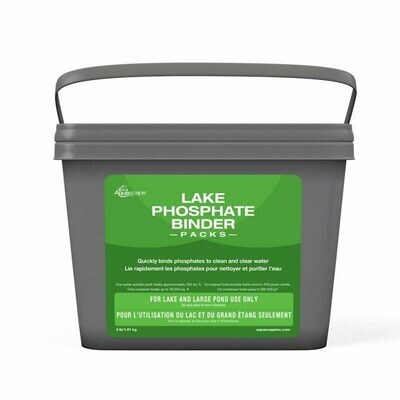
Lake Phosphate Binder Pond Clarifier - 1152 packs (24 lb) Pail - by Aquascape
Clears Water & Reduces Algae in a 1 Acre Pond For up to 6 Months
Aquascape® Lake Phosphate Binder Packs quickly bind large amounts of phosphate which otherwise cause issues with water quality and clarity in lakes and large ponds. This specially-formulated treatment will effectively reduce maintenance and bind phosphate (specifically orthophosphate which is the form that is used by plants and algae). Simply toss the easy-to-use water-soluble packs directly into the water. The packs will dose the water column evenly and make it easy to treat hard to reach areas. Safe for fish, plants, and animals when used as directed.
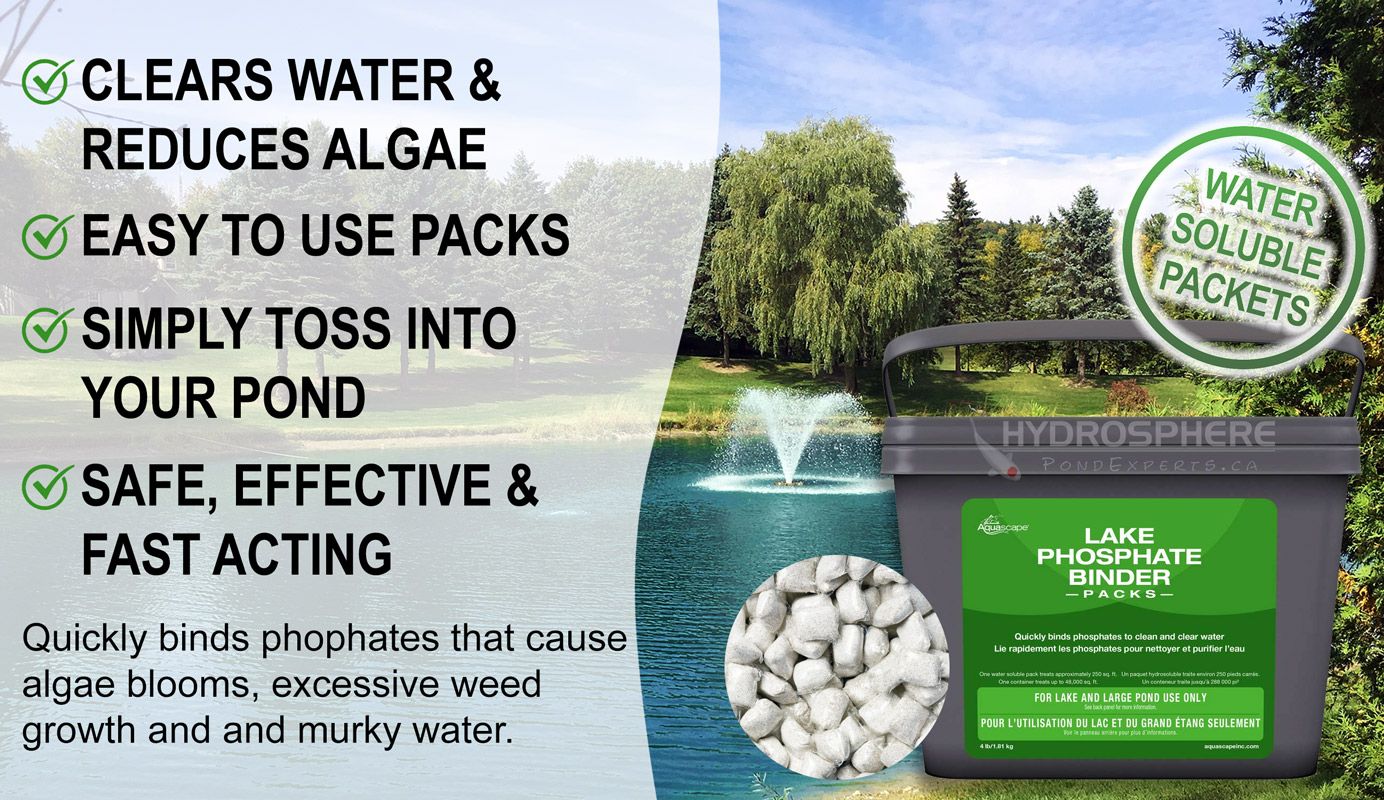
Why Should I Remove Phosphate?
Phosphate is one of the main nutrients that plants and algae consume as food. If you look at a container of fertilizer, you will see a group of 3 numbers listed on the label such as 20-20-20, or 30-10-10. These numbers represent the ratio of the 3 main ingredients: Nitrogen, Phosphorous and Potassium. Phosphorous is the second number in the group. While it is natural to have low levels of phosphorous / phosphate in ponds, excessive phosphate acts like a fertilizer that promotes excessive weed growth, cloudy water and algae blooms in large ponds and lakes. Algae blooms not only make your pond unsightly, they can also lead to poor water quality and low oxygen levels. Phosphates can come from various sources such as runoff, fertilizers, fish or wildlife waste and organic matter such as leaves twigs and branches from trees.
Check out our Lowering Phosphate in Large Ponds page for more information.
Effective Against:
Lake Phosphate Binder Features:
Directions For Use:
Fish, Plant & Wildlife Friendly
When used in accordance with label directions Lake Phosphate Binder Packs are completely safe for your fish, plants, pets and pond wildlife.
Dosage Table:
| Lake Phosphate Binder Packs Dosage Rates | |
|---|---|
| Pond Size
(In Surface Acres) |
Phosphate Binder Packs
(Once per Month) |
| Up to 1/4 | 44 Packs |
| Up to 1/2 | 88 Packs |
| Up to 3/4 | 132 Packs |
| Up to 1 | 176 Packs |
Regular, partial water changes help to improve water quality by flushing out dissolved waste materials and replenishing essential minerals.
Tosai is the Japanese term that refers to a koi that is 1 year old. Learn more Japanese Koi Terminolgy.
Adding LED Pond Lighting is great way to extend the time you can enjoy your pond. Lighting up waterfalls or fountains adds a whole new dimension to your pond at night.
Lotus make stunning pond plants. The larger varieties have huge leaves that grow up to 24” in diameter held up to 3 feet above the water. Their flowers are very fragrant and measure up to 8” in diameter. There are also medium and dwarf sized lotus that will suit any size pond or water feature.
Yes, water lettuce do actually flower! However, the flowers are so small most people never actually notice them.
Chagoi are single coloured koi that range from light greenish brown to dark brown. Although they don’t have bright colours or intricate patterns, they are well known for growing larger than other varieties. They are also renowned for being very friendly and docile and are usually the first koi to come and eat food from your hand.
Oxy-Pond Cleaners are a great product for spot treating string algae on waterfalls and in shallow streams. Simply turn off your pump, sprinkle it on any algae, wait about 15 minutes and turn your pump back on.
Great Blue Herons are typically solitary birds, so placing a lifelike heron decoy at eh edge of your pond often deters them from visiting your pond and eating your fish. If you have a heron that lives near your pond, moving your decoy around from time helps to maintain illusion.
Goldfish make ideal pets for small ponds because of their modest size. They typically grow 8”- 10" long, although they can occasionally get bigger. The best types of goldfish for outdoor ponds are Comets, Sarasa Goldfish and Shubunkins.
Having some algae in your pond isn’t a bad thing. In fact, algae consumes nutrients and waste products and helps to purify your pond water. Many small zooplankton feed on algae which then become food for small fish.
While Tropical Water Lilies may be a bit expensive and will not survive the winter in the pond except in very warm climates, they are definitely worth it. They bloom profusely all summer long; they are available in many colours and they often have large exquisitely patterned leaves.
Floating plants like water lettuce and water hyacinths provide shelter and hiding places for koi and goldfish and can protect them from predators like herons.
Frogs typically hibernate during the winter by burrowing in the mud found in ponds and lakes. Their metabolism slows down enough that they can absorb all the oxygen they need through their skin.
Nisai is the Japanese term that refers to a koi that is 2 years old. Learn more Japanese koi Terminolgy
Body flukes (Gyrodactylus sp.) are a fairly common parasite found on pond fish. They do not lay eggs like gill flukes, instead they produce live young. They are found both on the gills and the body of fish.
Covering 50%-65% of your pond’s surface with plants is recommended to help shade the pond and keep the water cool in the summer months. Plants also consume excess nutrients from the water reducing algae growth and help to maintain optimal water quality. These 'Clear Water Plants' are some of the best plants for maintaining a clear, healthy pond.