
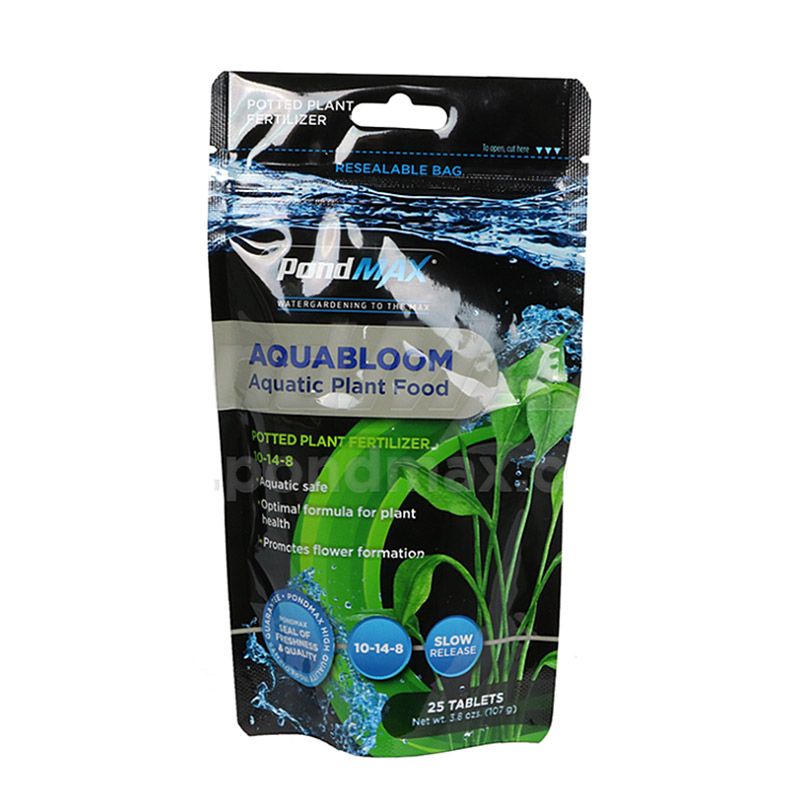
AquaBloom Pond Plant Fertilizer
*Coming Spring 2026*
Aquabloom Pond Plant Fertilizer Tablets are specially designed with a slow release formula that optimizes the growth and blooming of aquatic plants in ponds, bogs, streams or any water feature. AquaBloom Pond Plant Fertilizer is formulated with an optimal 10-14-8 (NPK ratio) to ensure lush foliage while promoting abundant flower blooms.
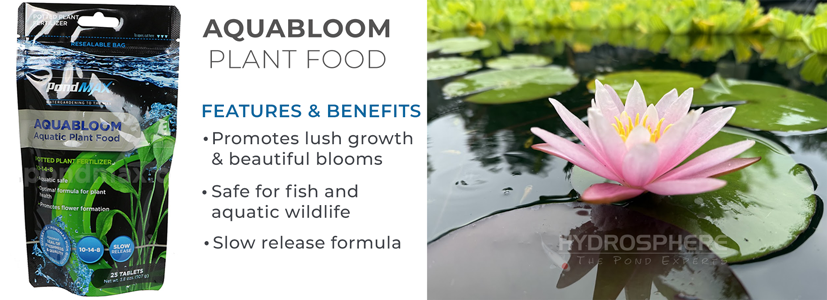
The slow release formula reduces excess nitrogen and phosphorus from leaching into the water reducing the risk of algae growth. AquaBloom fertilizer is perfect for fertilizing waterlilies, lotus, irises or any other marginal pond plants. This once-a-month fertilizer will greatly maximize plant growth and increase flower production of your favourite pond plants.
Simply push the tablets deeply into the soil and re-cover with soil, once in the spring when plant growth has started. Then reapply each month during the growing season.
Features:
When To Apply AquaBloom Pond Plant Fertilizer Tablets
It is easy to apply AquaBloom Fertilizer when potting or repotting your aquatic plants. Simply push 1 tablet per 1 gallon of soil deeply into the soil at least 3 inches / 10 cm from the crown of the plant and re-cover with soil, once in the spring when plant growth has started.
Reapply each month during the growing season. For heavy feeders like water lilies, lotus or tropical marginals, you can repeat every 2 weeks when the water temperature is over 70 F / 21 C.
How To Apply AquaBloom Pond Plant Fertilizer Capsules