You are what you eat....and so are your koi and goldfish.
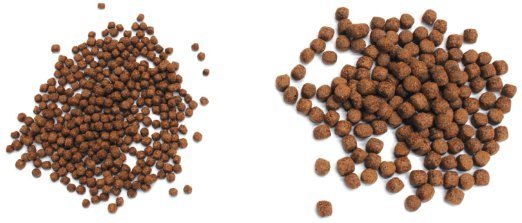
The food you feed your koi is very important to their health and well-being. Feeding a low quality food or food that is not meant for koi can significantly shorten their lifespan. Trout food is a good example. Although it can be substantially less expensive than koi, food it does not meet the dietary needs of koi and goldfish. Trout food is designed for carnivorous fish and is often made with lower quality ingredients which are not easily digested by koi. It can also have up to 2 times the fat content of koi food.
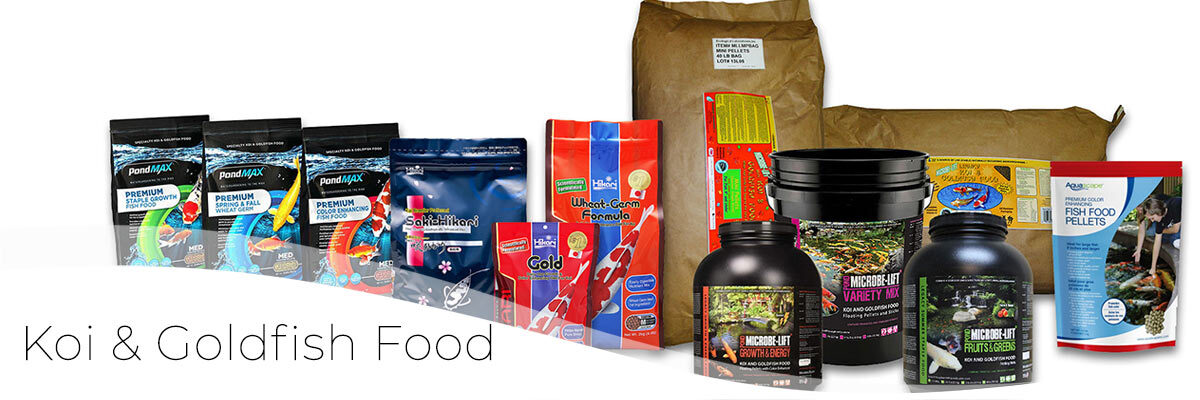
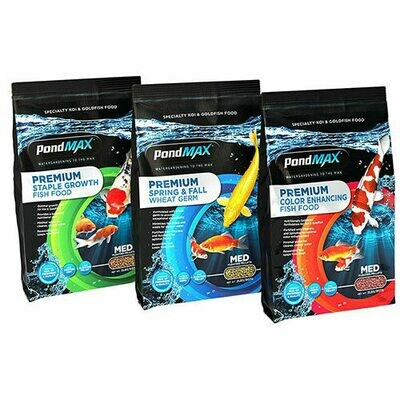
We have a great selection of quality colour enhancing, growth staple, and wheat germ fish food for koi or goldfish at excellent prices. Hikari, Microbe-Lift / Legacy, Aquascape, and PondMax are some of the brands that we carry.
Which Fish Food To Choose
Like most pond enthusiasts,you want to feed your koi or goldfish the best fish food, one that meets all their nutritional requirements. But with so many varieties to choose from , how do you select the right one? The answer depends on many different things such as the age of your fish, the time of year and also price. Typically, cheap fish foods contain more fillers and are made from lower quality ingredients. Although they are easy on the pocket book, they often not very digestible which results in more waste in your pond and more frequent filter cleaning.
Colour Enhancing Fish Food
Colour enhancing fish food usually contains natural ingredients that bring out the reds, yellows and orange colours in koi and goldfish. If you want your fish to look their best, check for ingredients like spirulina, krill and astaxanthin.
High Growth Fish Food
High growth food usually contain higher levels of proteins. People that want to maximize the growth potential of their koi often choose this food. High growth foods should only be fed when the water temperature is above 60-65 F.
Wheat Germ Fish Food
Whet Germ food is typically fed in the spring and fall, when the water temperatures are below 60-65 F. As the temperatures drops, fish metabolism slows and their ability to digest food decreases as well. Koi and goldfish digest whet germ very easily so feeding wheat germ food in cooler temperatures really benefits the fish. Some people who have mature fish also feed this food as the staple diet right through the summer because their fish have stopped growing.
Read our Feeding Koi at Different Temperatures to find out when to start and stop feeding your fish depending on the water temperature and also what type of food is best to feed in each season.