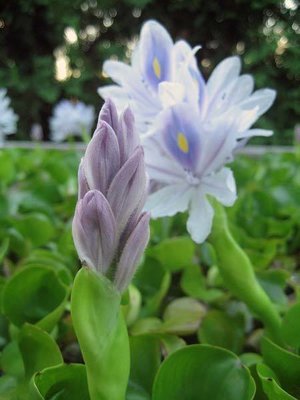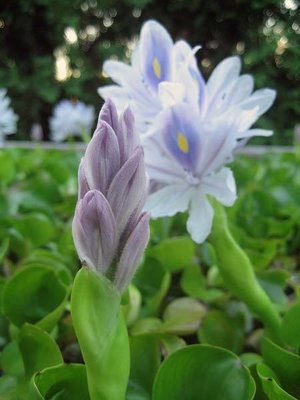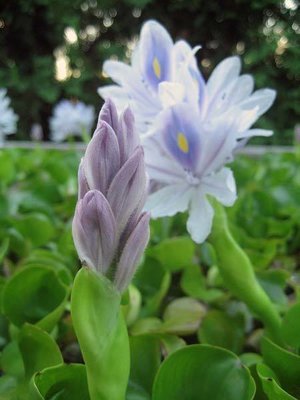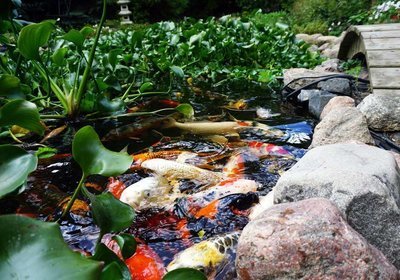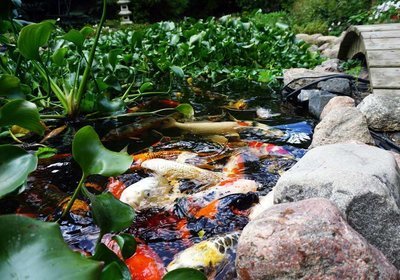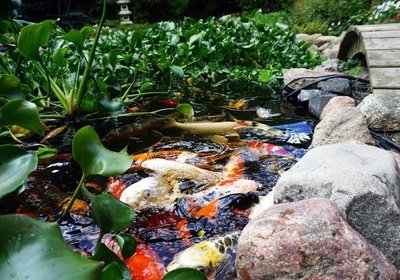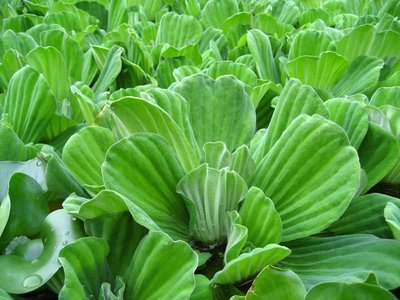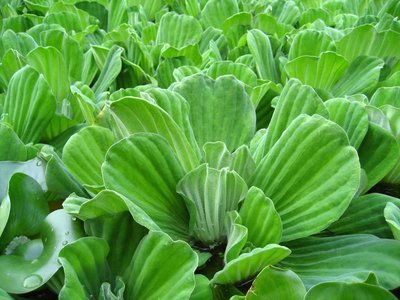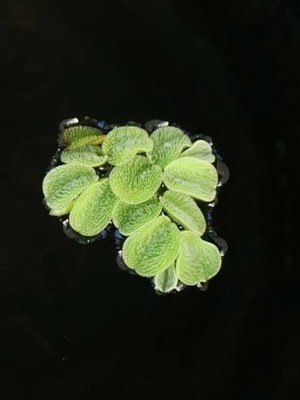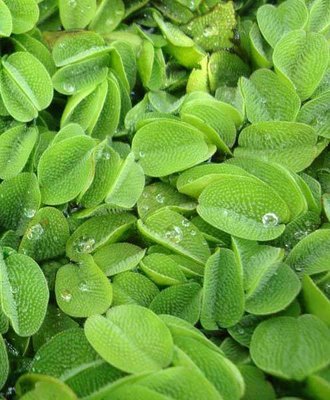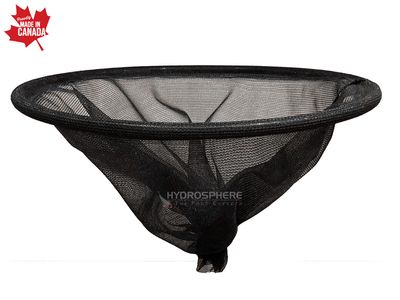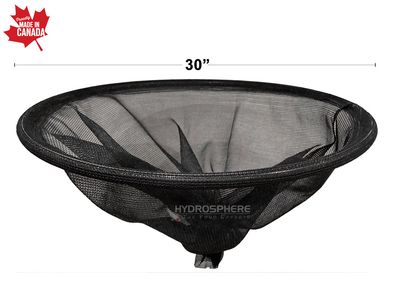
Floating pond plants are the best plants to reduce algae and improve water quality in the pond. Most floating pond plants are heavy feeders and fast growers. They can multiply rapidly, in fact, they can cover the entire surface of a pond if not controlled. Because they grow so fast, they out-compete the algae for the nutrients in the water, essentially starving the algae. Since they float on the surface of the water, they block out the sunlight and shade the pond. This prevents light from entering the pond fighting algae on another level. Their long branched root structure also provide spawning areas for fish and shelter for baby fish.
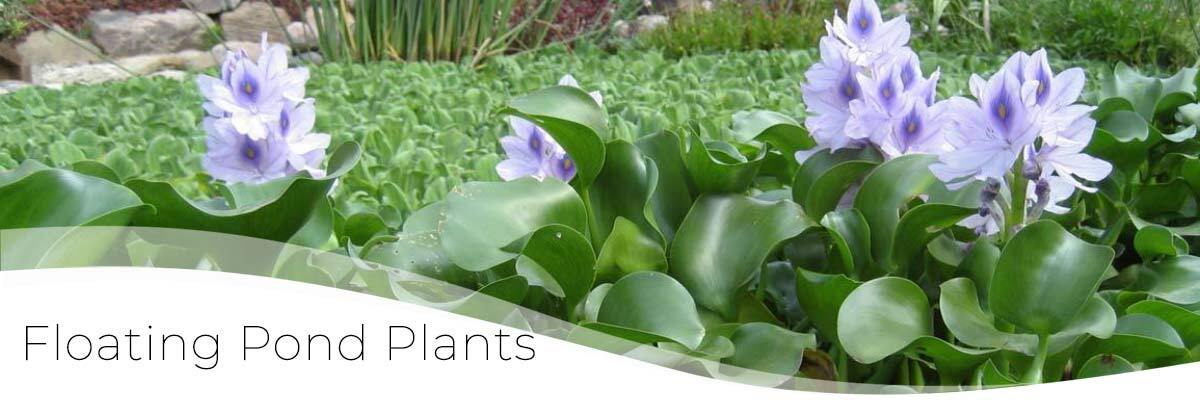
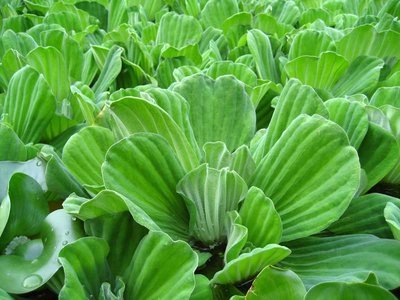
Floating pond plants such as water hyacinths and water lettuce reproduce quickly by producing small plantlets radiating out from the center of the plant. Their intricate root structure provides spawning areas for fish and shelter for baby fish. A great plant for the pond to provide shade and improve water quality
Regular, partial water changes help to improve water quality by flushing out dissolved waste materials and replenishing essential minerals.
Water Hyacinths are one of the best filter plants for your pond. Because they grow so quickly, they rapidly consume excess nutrients, improve water quality and reduce algae growth in your pond.
Koi typically spawn in the spring once the water temperature get above 16 C – 18 C. They usually lay their eggs in and around the roots of plants or vegetation in the pond. The eggs stick to whatever they land on and often hatch in about 3-4 days.
Green frogs can live up to 10 years in the wild, though many do not live that long due to predation.
Asagi a koi variety with a blue-grey body and red markings on the belly, fins, and gill covers. They are one of the oldest koi varieties.
Magnetic Drive and Asynchronous pumps are very energy efficient and long-lasting pumps. With only 1 moving part, their simple design provides many years of reliable service and cost less to operate than direct drive pumps.
Ammonia is one of the most common killers of fish. It is the main waste product produced by fish and can become dangerously high from overfeeding, spawning, inadequate filtration or over crowding.
Water lilies are heavy feeders and require regular fertilizing for them to produce abundant blooms. Most fertilizer tablets should be applied directly into the soil at least every monthly during the growing season.
A properly sized Ultraviolet Clarifier will quickly clear up green cloudy water in your pond, usually in less than 1 week.
Automatic Fish Feeders are an great way to make sure your fish are fed while your are away, and more reliable than your neighbours!
One of the most significant advantages of using Kaldnes or similar filter media in a moving bed filter is its self-cleaning property. As the media moves within the filter, it continuously rubs against other media pieces. This abrasion helps to slough off excess biofilm, preventing the media from becoming clogged and maintaining optimal filtration efficiency.
Water lily flowers close at night to protect their delicate structures from predators or getting too damp from heavy morning dew
Pond Dye helps reduce algae growth in ponds by reducing the amount of sunlight that enters the pond. Submerged algae (and plants) cannot grow if they don’t receive enough sunlight.
All parts of the lotus plant are used in traditional medicine for treating abdominal cramps, bleeding ulcers, sunstroke, insomnia, skin ailments and many more.
Water Lilies come in different sizes. If you have a small pond, choose a water lily with a small spread so it doesn’t overtake your pond. If you have a large pond, you can choose lilies with small, medium or large spreads.
Utsuri – is the term used to describe a koi with only 2 colours. It is a black koi with one other colour such as white (Shiro Utsuri), red (Hi Utsuri), or yellow (Ki Utsuri)