
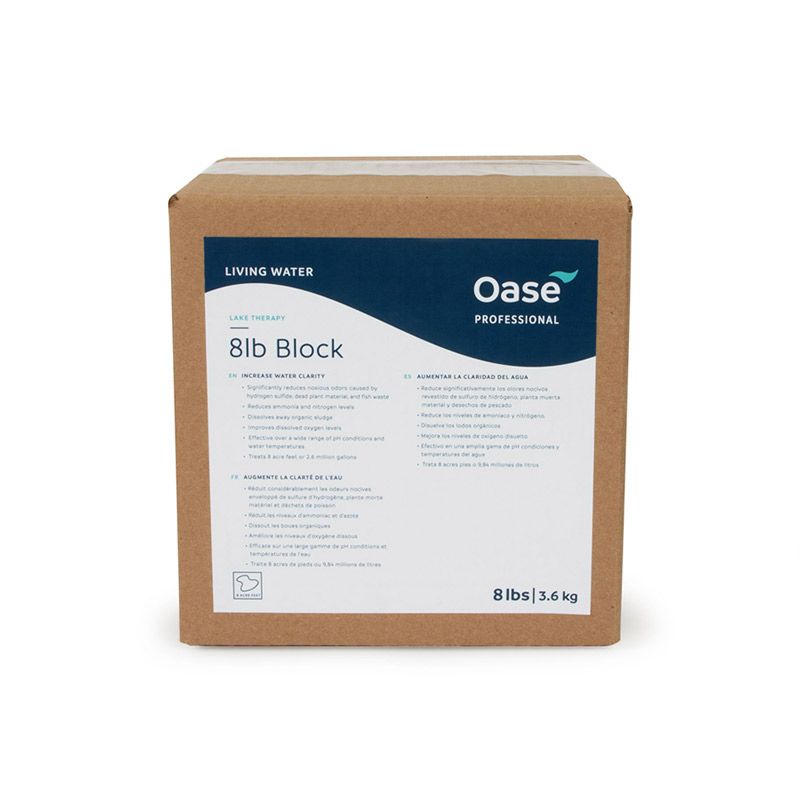
Oase Pond Block - 8 lb Pond Cleaner
Treats 2.6 Million Gallons For 2 Months
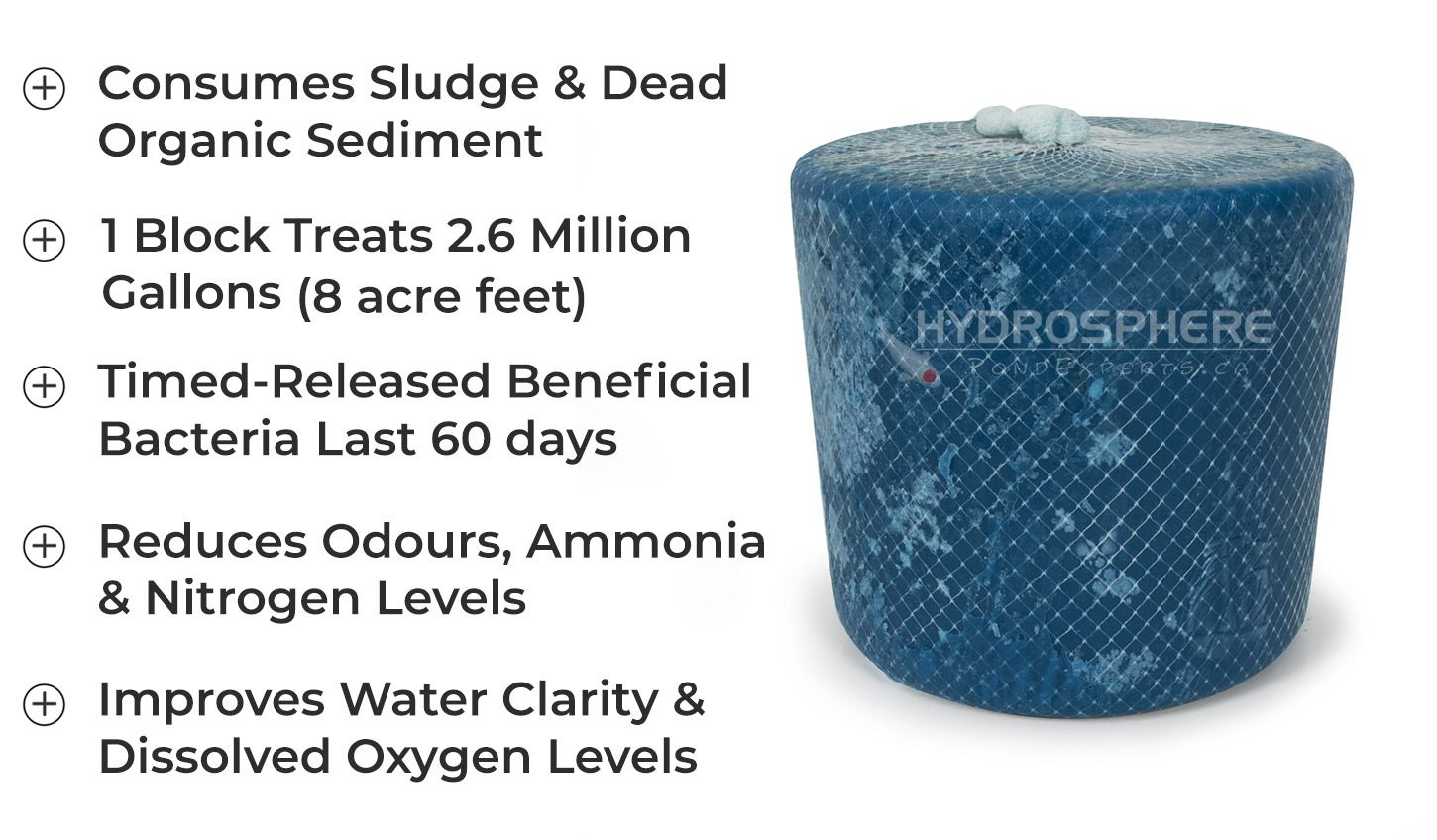
Oase's Pond Block is an all natural, non-chemical approach to reducing sludge, improving water quality and clarity in large ponds, lakes, retention ponds and dugouts. The Pond Block contains several different strains of beneficial bacteria and enzymes that are specialized to break down pond muck and organic sediments. The unique design of the block allows these beneficial bacteria to be slowly released providing a long lasting treatment that works for 60 days.
Oase's 8 lb Pond Block is the largest available on the market, 60% bigger than the competition, treating a whopping 8 acre feet (2.6 million gallons). It will treat a 1 acre pond that averages 8' deep for 60 days.
As organic debris such as leaves, twigs, grass clippings and fish waste settle at the bottom of your pond, they gradually accumulate into a layer of muck / sludge. As this muck layer increases over time, it begins to reduce the water quality and clarity of your pond as it slowly releases nutrients into the water. These nutrients cause excessive weed growth, foul odours, cloudy water and algae blooms.
By reducing excess nutrients and muck from your pond, Pond Block reduces pond odors, helps slow weed and algae growth and keeps your pond water clear and balanced.
Oase's Pond Block is a completely natural product. When used in accordance with label directions it is completely safe for your fish, plants, pets and pond wildlife.
Oase's Pond Block can be placed on the bottom of your pond, however, it is most effective when placed in an area where there is moving water or slight current. Ideally it can be suspended from a dock or large floating fountain, or placed on the bottom of the pond near a sub surface aeration diffuser.
If placing the Pond Block on the bottom of the pond, try to avoid areas with deep sludge, as the effectiveness could be reduced if buried deep in the layer of sediment..
For highly eutrophic ponds that have high nutrient loads causing excessive weed growth, algae blooms and have a thick sludge layer you can apply more than the recommended dosage.
Regular, partial water changes help to improve water quality by flushing out dissolved waste materials and replenishing essential minerals.
Utsuri – is the term used to describe a koi with only 2 colours. It is a black koi with one other colour such as white (Shiro Utsuri), red (Hi Utsuri), or yellow (Ki Utsuri)
Hanako, the oldest koi have ever lived, was born in 1751 and lived until July 7, 1977 - an extrordinary 226 years! The age of Hanako was verifed by scale analysis. July 7 was named National Koi Day in honour of Hanako.
Keep a close eye on your pond during the winter months to ensure there is an opening in the ice to allow oxygen into the water and gases to escape.
Tosai is the Japanese term that refers to a koi that is 1 year old. Learn more Japanese Koi Terminolgy.
Adding LED Pond Lighting is great way to extend the time you can enjoy your pond. Lighting up waterfalls or fountains adds a whole new dimension to your pond at night.
Lotus make stunning pond plants. The larger varieties have huge leaves that grow up to 24” in diameter held up to 3 feet above the water. Their flowers are very fragrant and measure up to 8” in diameter. There are also medium and dwarf sized lotus that will suit any size pond or water feature.
Yes, water lettuce do actually flower! However, the flowers are so small most people never actually notice them.
Chagoi are single coloured koi that range from light greenish brown to dark brown. Although they don’t have bright colours or intricate patterns, they are well known for growing larger than other varieties. They are also renowned for being very friendly and docile and are usually the first koi to come and eat food from your hand.
Oxy-Pond Cleaners are a great product for spot treating string algae on waterfalls and in shallow streams. Simply turn off your pump, sprinkle it on any algae, wait about 15 minutes and turn your pump back on.
Great Blue Herons are typically solitary birds, so placing a lifelike heron decoy at eh edge of your pond often deters them from visiting your pond and eating your fish. If you have a heron that lives near your pond, moving your decoy around from time helps to maintain illusion.
Goldfish make ideal pets for small ponds because of their modest size. They typically grow 8”- 10" long, although they can occasionally get bigger. The best types of goldfish for outdoor ponds are Comets, Sarasa Goldfish and Shubunkins.
Having some algae in your pond isn’t a bad thing. In fact, algae consumes nutrients and waste products and helps to purify your pond water. Many small zooplankton feed on algae which then become food for small fish.
While Tropical Water Lilies may be a bit expensive and will not survive the winter in the pond except in very warm climates, they are definitely worth it. They bloom profusely all summer long; they are available in many colours and they often have large exquisitely patterned leaves.
Floating plants like water lettuce and water hyacinths provide shelter and hiding places for koi and goldfish and can protect them from predators like herons.
Frogs typically hibernate during the winter by burrowing in the mud found in ponds and lakes. Their metabolism slows down enough that they can absorb all the oxygen they need through their skin.