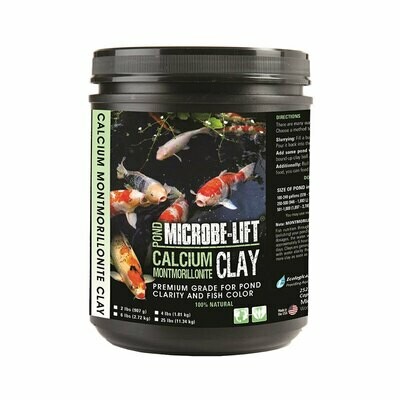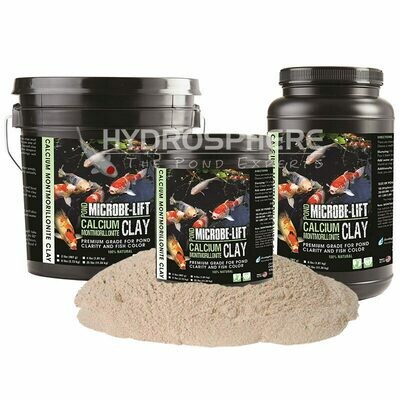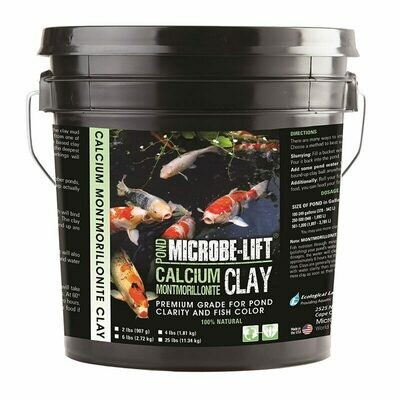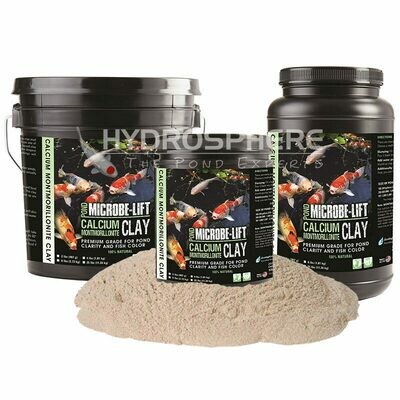
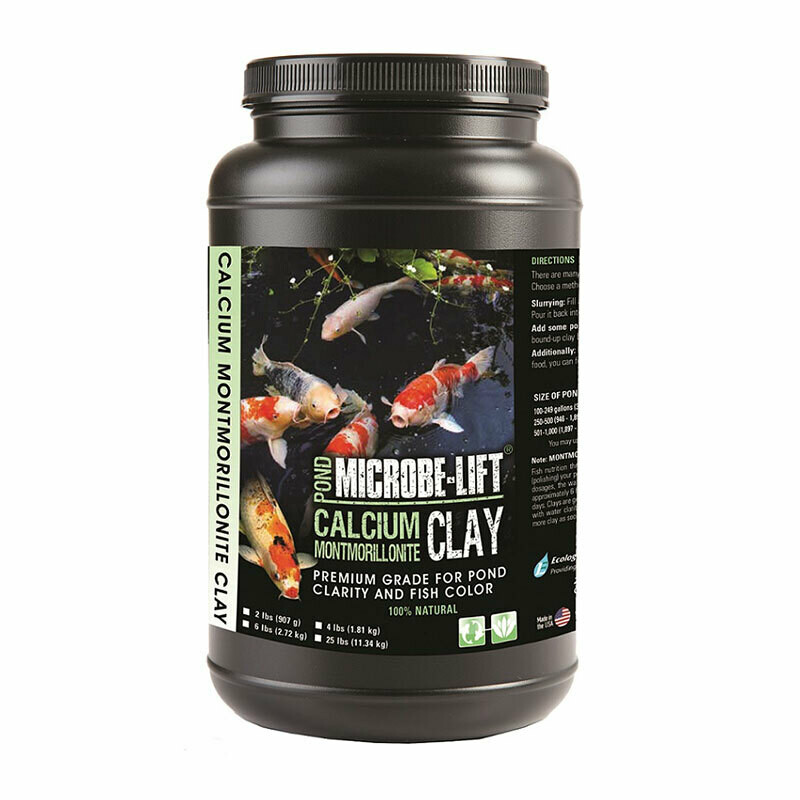
Calcium Montmorillonite Koi Clay - 4 lb by Microbe Lift
Microbe-Lift Calcium Montmorillonite Clay is 100% natural and specially formulated for pond clarity & koi health, growth & color.
It is said the secret to Japanese healthy, colourful koi is the clay mud in which they are raised. Microbe-Lift Calcium Montmorillonite Clay comes from one of the highest calcium clay deposits in the world. Calcium based clay may actually help your pond's water to produce some of the healthiest and deep coloured koi you've ever raised (or seen). The koi's marking will become brighter and more dominant.
Plastic pre-formed ponds, as well as vinyl, cement and rubber ponds, do not have any nutrients on their bottom. In the wild, carp use mud to get many of their micronutrients and minerals. MICROBE-LIFT/CMC has a negative electric charge which will bind the clay particles to positively charged toxins in the water. MICROBE-LIFT/CMC is not only a nutrient source for koi, it will also "polish" your pond water. The clay acts as a natural flocculent and the particles that are bound up are filtered out of the pond. The clay can help make pond water sparkling clean (polishing).
Clay is used in ponds to achieve many goals:
Dosage:
| Pond Volume | Application |
| 100-249 gallon pond | 1 level teaspoon twice weekly |
| 250-500 gallon pond | 1 level tablespoon twice weekly |
| 501-1000 gallon pond | 2 level tablespoons twice weekl |
You may use more clay to meet your goals. Clay cannot be overdosed.