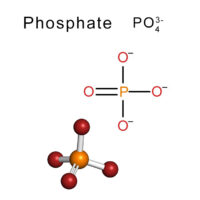
Phosphate is an ion, a chemical compound containing 1 Phosphorus atom surrounded by 4 Oxygen atoms. It is commonly found in soil and water and is essential for plant growth. Phosphorous commonly used in fertilizers to promote improved growth in horticultural plants and agricultural crops.
Phosphate is one of the main nutrients that plants and algae consume. If you look at a container of fertilizer, you will see a group of 3 numbers listed on the label such as 20-20-20, or 30-10-10. These numbers represent the ratio of the 3 main ingredients: Nitrogen, Phosphorous and Potassium. Phosphorous is the second number in the group.
Phosphorus is critical in root development, allowing young plants to develop a strong root system to uptake nutrients. It also plays a key role in flower formation and seed development.
While it is natural to have low levels of phosphorous / phosphate in ponds, excessive phosphate acts like a fertilizer that promotes excessive weed growth, cloudy water and algae blooms in large ponds and lakes.
Phosphates enter ponds and lakes from various sources such as runoff from agricultural fields, wastewater / septic discharge, lawn fertilizers and fish and wildlife waste.
In ponds that don’t have any inflowing water, their main source of phosphate is organic matter such as leaves twigs and branches falling into the pond from nearby trees. Ponds with many mature tress nearby, have a significant number of leaves, seeds and branches fall into the pond and sink to the bottom. Over time, this organic matter accumulates into a thick layer of sludge that releases phosphates and other nutrients into the water. This process is referred to a Eutrophication.
Eutrophic ponds (ponds with high phosphate and other nutrient levels) commonly have excessive growth of aquatic weeds and plants, algae blooms, murky water and unpleasant odours. This most often occurs in older ponds, especially ponds that have many mature trees nearby that drop a lot of leaves into the pond.
Newly dug ponds may go through an initial cloudy stage but soon clear up once a biological balanced is reached and remain clear for many years without any intervention. Depending on the surroundings, these ponds often start to accumulate organic matter from tree leaves, twigs, decaying plant matter, fish waste and organic runoff. For the first number of years this organic matter doesn’t cause problems, however, as it builds up it will start to cause water quality and clarity issues. After about 8-10 years, many pond owners start to notice occasional murkiness, periodic algae blooms or increased weed growth at certain times of the year. Once these problems start, they typically become more frequent and more pronounced each year until it becomes an constant, ongoing problem.
If your pond is showing increased weed growth or more frequent algae blooms, chances are they will not go away. In fact, they will most likely only get worse in the coming years if you don’t take action. The solution to reversing these problems and returning your pond to a its former glory, you need to lower the phosphate in your pond.
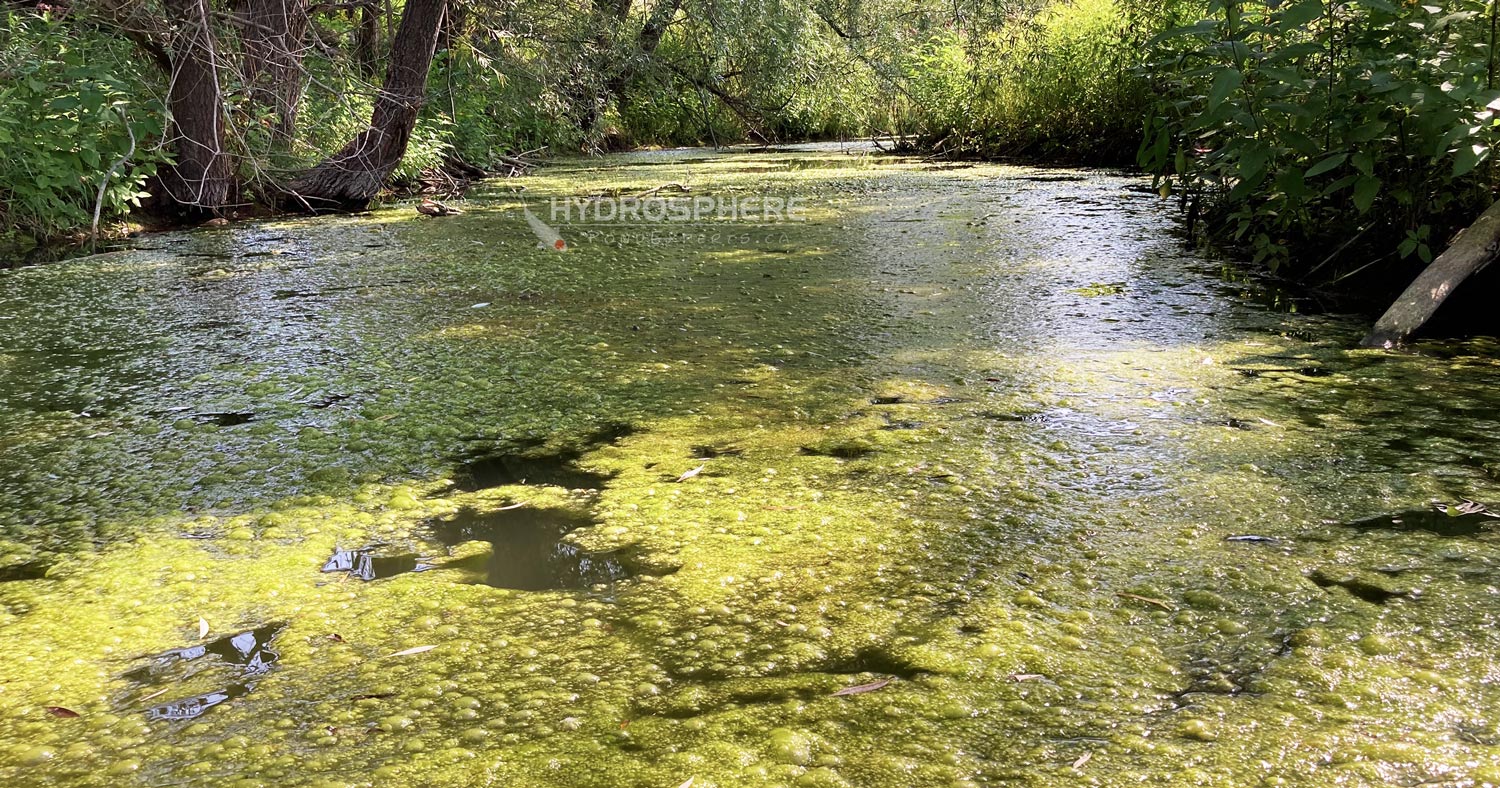
There are many different types of filamentous algae that grow in ponds and are often affectionately referred to as pond scum, frog spit, green slime and snot algae to name a few. Some form long fibrous strands that adhere to rocks or logs, while others are more gelatinous. In ponds with high phosphate levels, these types of algae flourish and eventually form the dreaded ‘pond scum’ on the surface of the pond. These types of algae are probably the most common and unsightly in ponds and cause pond owners the biggest headaches.
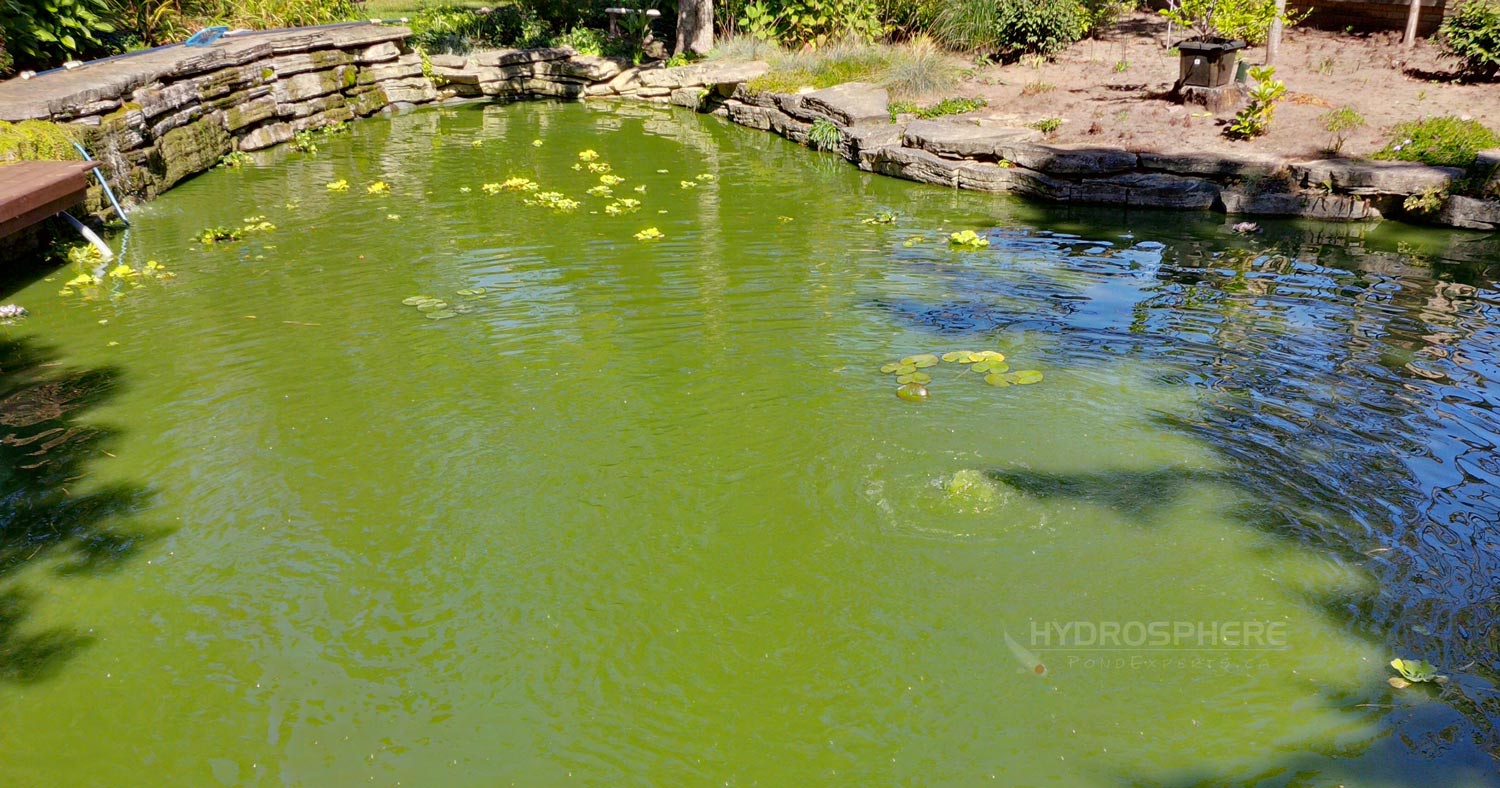
If you see a murky brown pond, or a pond with ‘pea soup’ green water, it is most likely eutrophic (nutrient rich). This green water is caused by a planktonic algae bloom. Planktonic algae is a microscopic, single celled algae that floats freely in the water column. These algae blooms not only make your pond unsightly, but they can also lead to poor water quality, low oxygen levels and even fish kills. High phosphate levels can feed this type of algae for weeks or months depending on the conditions in the pond.
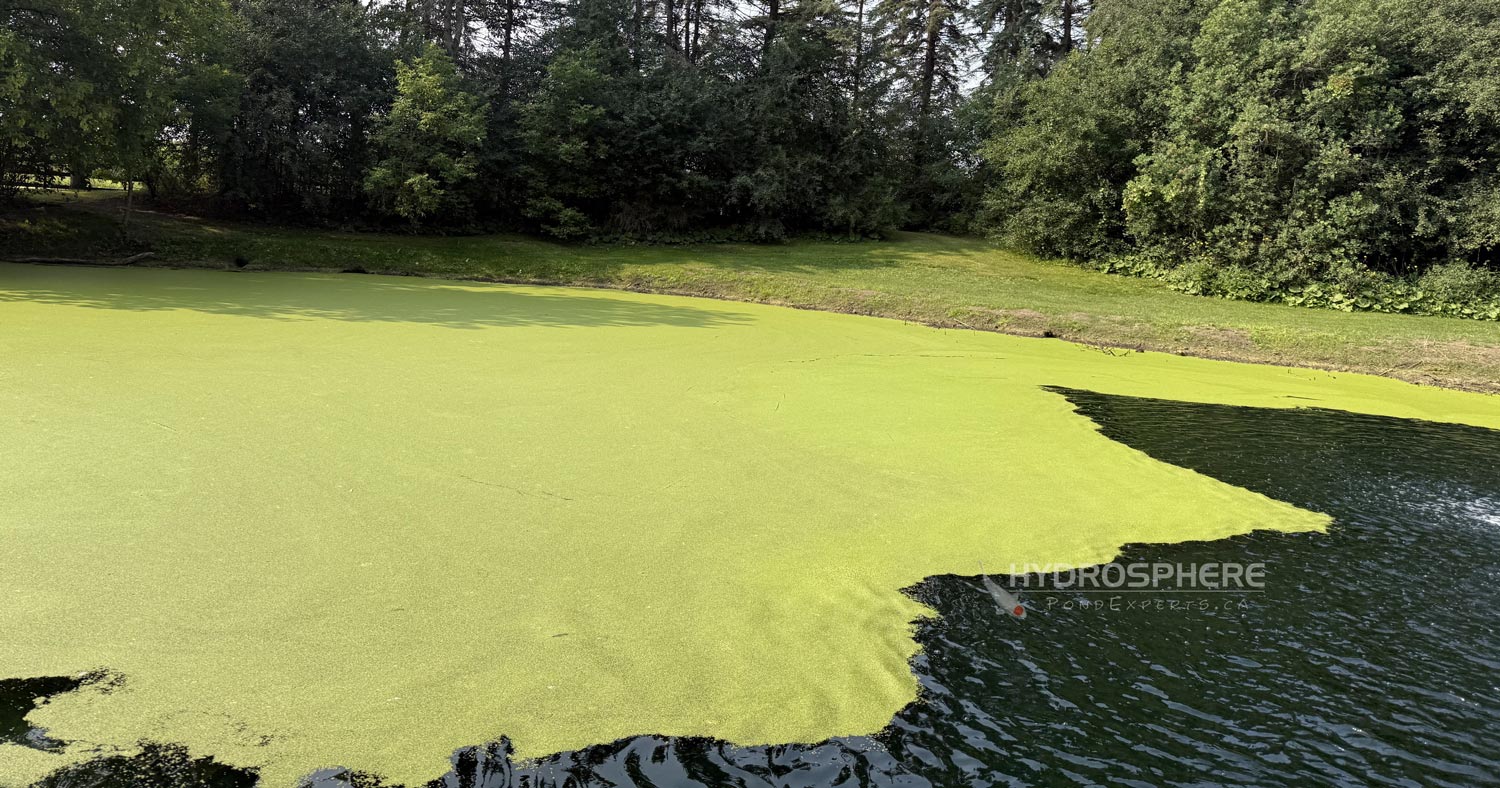
Duckweed is a small floating plant can grow very rapidly in the right conditions. Warm temperatures and high phosphate levels allow duckweed to multiply exponentially and completely cover ponds. Ponds that are completely covered by duckweed, often have oxygen levels that are dangerously low because it smothers surface of the pond where oxygen transfer takes place. Duckweed can be introduced into a pond via inflowing water or even carried by bird or other wildlife. A similar, yet even smaller floating plant called Wolfia is less common but can still cover ponds in a similar matter.
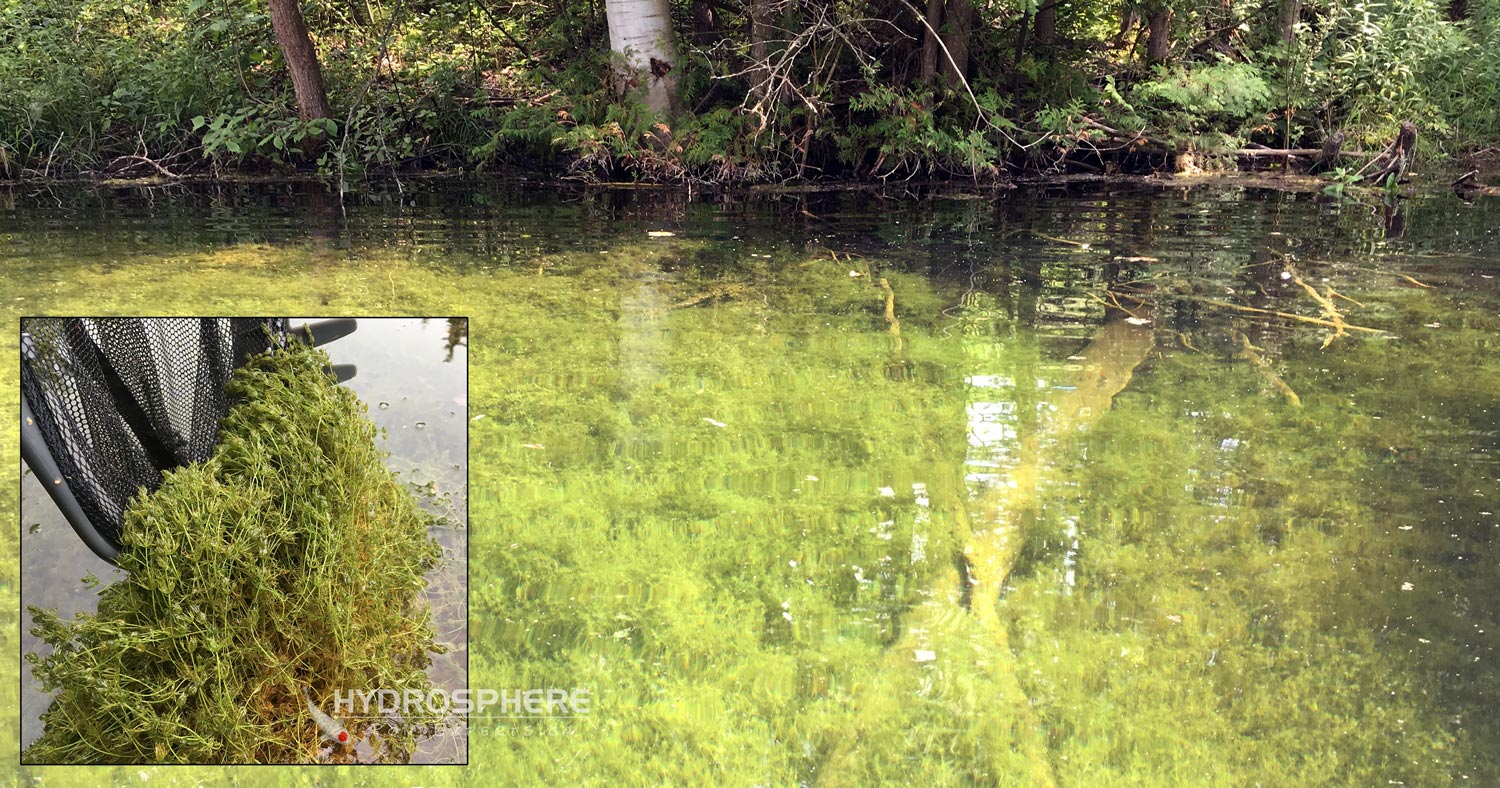
Chara, also known as muskweed, muskgrass or stonewort, resembles a vascular plant, but it is actually a type of algae. Although it doesn’t have a root structure, it grows on the bottoms of ponds or slow-moving rivers and ‘settles’ into the sediment on the bottom. Chara can form very large, dense mats that can reach the surface of the water in eutrophic ponds and can become very unsightly. Over the winter months, Chara dies back, falls to the bottom, decays and releases its nutrients back into the water to feed the cycle again the following year. Once removed from the pond, Chara turns a chalky, whitish colour and becomes quite brittle and gritty when it dries.
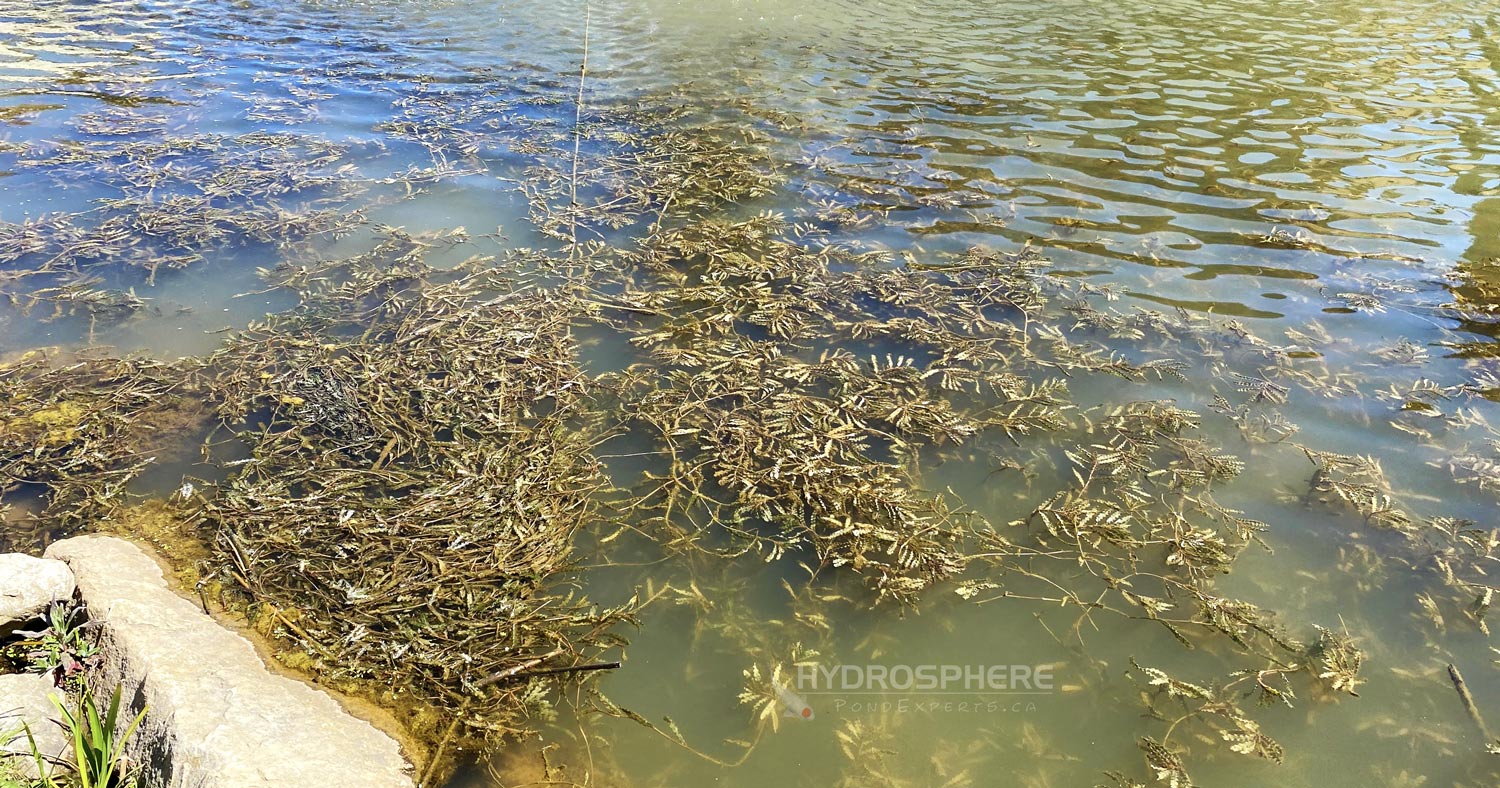
There are many different types of submerged aquatic plants that grow in pond and lakes. Some of the more common varieties include Elodea, Hornwort, Smartweed as well as many species of Pondweed. These plants typically anchor or root themselves on the bottom of the pond. While all of these plants are beneficial, providing habitat and spawning grounds for fish and other aquatic wildlife, they can quickly overtake a pond forming dense colonies of plants that reach the surface, often ‘piling’ up on each other creating a real mess.
Managing the phosphate level in your pond is crucial to reduce algae blooms, excessive weed growth and maintaining a healthy ecosystem. There are a few different ways to reduce phosphate levels in large ponds. Some methods work quite quickly, but don’t have long-lasting effects, while other options take longer show noticeable results, but create long-lasting results.
Lake Phosphate Binder binds phosphate (specifically orthophosphate which is the form that is used by plants and algae) and makes it unavailable to them and effectively lowers the phosphate level in the pond very quickly. Since phosphate is one of the major nutrients required by plants and algae, making it unavailable to them and drastically reduces excessive weed growth and algae blooms.
Another benefit of Lake Phosphate Binder is that its effectiveness is not temperature dependent. Meaning it can be added to pond early in the spring in cold water to help prevent algae or weed growth from getting started. However, even if your pond is already experiencing an algae bloom, Lake Phosphate Binder will also be effective eliminating the problem. It will starve the existing algae or duckweed; it will just take a few weeks for the algae to die.
The longer-term methods to reduce phosphate in ponds don’t typically have the same fast acting results as Lake Phosphate Binder. However, they get to the cause of the problem which is sludge, muck and organic matter on the bottom.
Ponds without aeration typically end up becoming eutrophic because a thick layer of muck gradually accumulates on the bottom year after year. In low oxygen environments, this organic matter decays incompletely into a thick black sludge that constantly releases phosphate and other nutrients into the water column, feeding excessive weed and algae growth.
Use the power of mother nature to digest and reduce the muck on the bottom of your pond by harnessing bacteria and enzymes.
Muck reducing tablets or pucks are specially formulated with strains of beneficial bacteria that specifically target and digest organic debris like fish waste, leaves, twigs, decaying plant matter and organic runoff that accumulates and forms muck. CystalClear MuckOut and ClearLake Muck Eliminator tablets contains billions of bacteria and sink to the bottom of the pond directly in the sludge layer and immediately go to work.
Another great bacteria based product is ClearLake Cold Water Clarifier. The strains of bacteria in this treatment work best in cold water. Ideally ClearLake Cold Water clarifier should be used when water temperatures are between 35 – 50 F / 1.7 – 10 C, when typical pond clarifiers and muck reducers are inactive. Perfect for early spring application to kick start your pond for clean clear water during the summer months. Then treat again in the fall to help break down and digest excess organic matter that has accumulated during the summer as well as any tree leaves that have fallen in to the pond late in the season
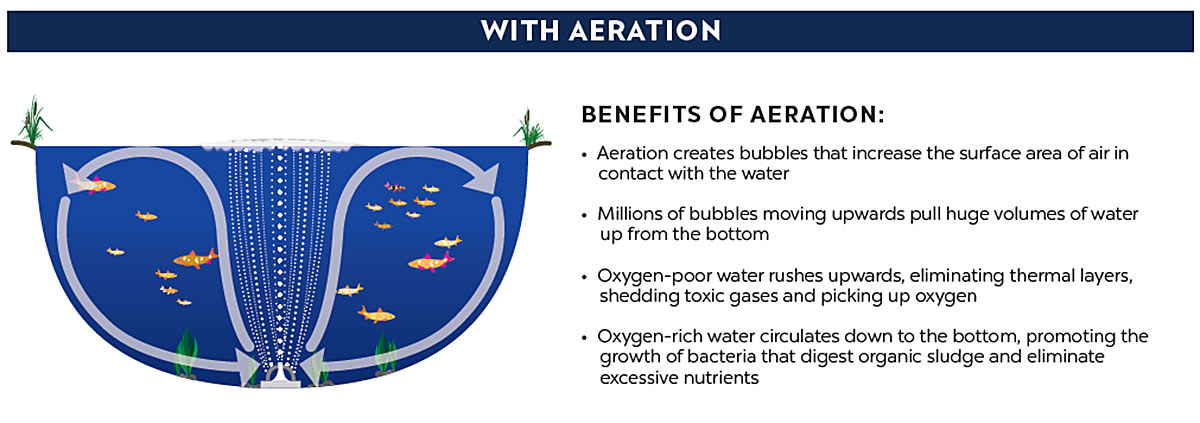
Ponds without some type of aeration system almost always have very low oxygen levels at the bottom of the pond. Learn More Without oxygen, the organic matter on the bottom can’t be broken down completely by bacteria and enzymes, resulting in a layer of sludge. Introducing oxygen to the bottom of the pond helps to help break down the sludge because the beneficial bacteria and enzymes can work much faster in higher oxygen environments. Use muck reducing tablets and aeration to provide a 1-2 punch, a synergistic effect that reduces muck and phosphate even quicker. For more information, see this article Large Pond Aeration – The Key to a Clear Natural Pond
There are basically 2 types of aeration systems for ponds; surface aerators and subsurface aerators.
Surface Aerators such as floating fountains work by pulling water from a few feet below the surface and pumping it up above the surface of the pond where the small droplets of water pick up oxygen from the air before falling back into the pond. Although they produce a visually appealing display, they are not effective in aerating deeper ponds because they only aerate the pull water from a few feet below the surface. Therefore, we recommend using floating fountains in ponds no deeper than about 5 feet, unless you use one in conjunction with a subsurface aeration system.
Subsurface Aeration Systems work by using a compressor to deliver fine bubbles of air to the bottom of the pond. As these bubbles rise, they create a current pulling water from the bottom along with them to the surface where it is thoroughly oxygenated before it returns to the bottom.
If you are thinking about installing an aeration system to you pond but aren’t sure what size you need, check out this article: How to Size an Aeration System for a Large Pond