
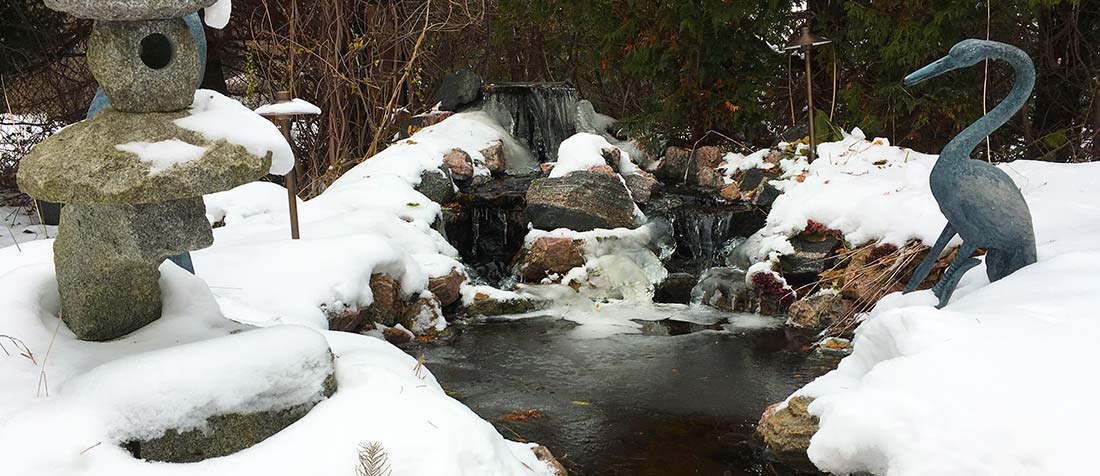
As the days grow shorter and the temperature falls, there are a few tasks that you need to do to get your pond ready winter. If you have koi or goldfish in your pond, it is essential to close your pond properly to help ensure they survive the long winter months and are alive and healthy next spring. Here are some tips to help you winterize your pond.
We have all the Fall and Winter Pond Supplies you need to prepare your pond for the winter. You might also want to look at How To build a Winter Pond Cover
Cold winter weather can sometimes hit suddenly, so it is important to get your pond ready for winter early, in case a sudden cold snap catches you by surprise. If not properly closed, the freezing winter temperatures can damage pond equipment.
In most cases, it is best to remove your pump from the pond, to make sure it does not get damaged by freezing. Clean it thoroughly and store it in your garage or shed for winter. If you have a direct drive style pump (not a magnetic drive or asynchronous pump) then it should be stored in a bucket of water and protected from freezing. This helps to keep the seals moist. If you have a magnetic drive or asynchronous pump they can be stored anywhere dry. When spring returns, your pump will be ready to install.
BioFalls and waterfall style filters can be left in place but should be drained of water. Some ponds have a check valve installed in the tubing, usually near the pump or in pond skimmer. These check valve prevent the water in the waterfall filter from draining back down into the pond or skimmer. These check valves should be removed because they will prevent the waterfall filter and tubing from draining. If water freezes in the tubing, there is a good chance it will split the tubing. It is also best to remove the filter pads and bio-media, clean them thoroughly and store somewhere dry.
In areas with milder climates, some people prefer to leaver their pumps and waterfalls running throughout the winter. This helps to keep a hole in the ice and maintain oxygen levels in the winter.
Pressurized Filters need to be drained of water and stored inside somewhere dry. It is best to remove the filter pads and bio-media, clean them thoroughly let them dry and then store them back inside the filter. Make sure not to lose the O-rings or gaskets, put any small or loose gaskets in a ziplock bag and store it in the filter so they are easy to find in the spring.
Gravity / Flow Through Filters should also be drained and thoroughly cleaned. These filters can be disconnected a stored inside for the winter, but can also be left outside for the winter. Larger filters might be difficult to move, or yo may not have enough space to store them inside. Make sure to leave the drain valve open in case any water gets in during the winter.
UV Lights should be disconnected, cleaned and stored somewhere safe where there is no chance of them falling and breaking the quartz sleeve and bulb. Again, keep track of the gaskets.
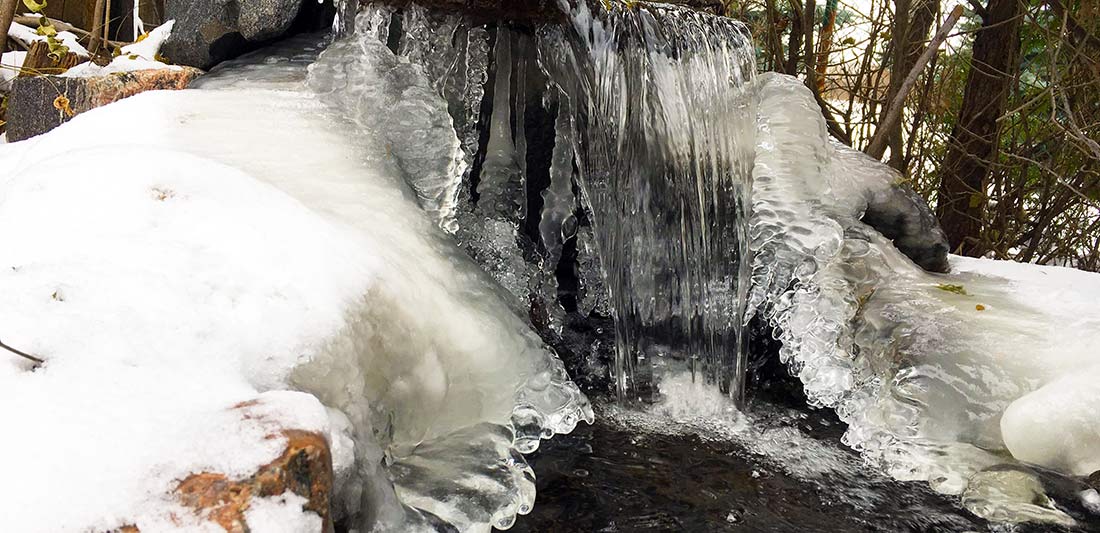
We often get asked by customers if they should leave their waterfall running all winter. Here in central Ontario, I recommend that you shut down your waterfall and remove the pump from the pond. Temperatures here can get quite cold causing ice more and more ice to build up around waterfalls and streams. In cold snaps ice ‘dams’ can form which can block the water returning to the pond, diverting over the edge of the liner and out of the pond. This will drain your pond and you may not even realize it.
This has happened to some of our customers. In one case, our customer decided to take a closer look at their pond after a few days of very cold weather. When they looked through the hole where their de-icer was, they noticed the pond was almost completely empty and their fish were frozen. It turns out, the pond had a fairly thick layer of ice, and it held its shape even after draining. Everything looked normal from a distance, but if they didn’t take a closer look, they wouldn’t have known anything was wrong until the warmer temperatures weakened the ice.
Another reason to shut down your waterfall is that you can actually chill your pond even more than normal. Exposing the pond water to the much colder air as it passes over the waterfall, will cool the pond water down more and cause more ice to form. We will often leave our waterfalls running into early December so that we can get some nice ice formations.
Insulating the pond, is another way to prevent a thick ice layer. If your pond is not too large, you can insulate it by laying boards across the pond, cover them with plastic, and insulate it with Styrofoam, a thick layer of leaves, straw or anything else that would provide insulation.
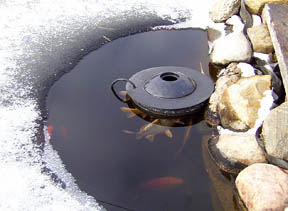
Goldfish and koi are very hardy fishes; they can survive water temperatures as low as 0°C, which means they can survive in the pond during the winter as long as it doesn’t freeze solid and they have adequate water quality and oxygen. To help ensure healthy fish in the spring, follow these steps:
Hardy Water Lilies are easily wintered, just cut back the yellowing leaves and submerge the lilies to a depth where they will not freeze, usually 2 feet is sufficient.
Lotus can be wintered in the same manner as water lilies. Lotus will survive the winter as long as the tubers do not freeze solid.
Hardy marginal plants can survive even if they freeze solid. Just cut back any dead foliage and leave them in the pond. These plants include most irises, sweet flag, rushes, reeds, grasses, hibiscus and horsetails. They can be submerged to deeper depths, but they will also do well if you leave them in their normal spot.
Marginally Hardy plants can survive the winter cold, but will die if their crown becomes frozen. These plants include: pickerel plant, hardy water canna, water clover, society garlic and other. To winter these plants submerge them below the ice line.
Tropical Plants will not survive the winter outdoors. But many of these plants will grow easily in the house if brought inside before the first frost. Place them in a container of water and given plenty of light. Plants such as Umbrella palm, papyrus, cannas, taro, bog lily, etc. can be brought inside and make great house plants